
A rough day for the metaverse
What Meta's Reality Labs cuts signal. Also: Anthropic's reorg, Microsoft's AI data center pledges.
It’s Tuesday, Jan 13th. Apologies for the late send, and please bear with me over the next couple of weeks as I write the newsletter from Europe.
3 things you should know:
Jokes aside, people are already doing cool things with Claude Cowork, but are also running into issues.
Instagram expanded access to the app’s algorithm for editing: prompt yours via the Reels tab in the top-right corner.
Overheard: “Credit card panel data for OpenAI/ChatGPT continues to look tough.”
“A more focused road map”
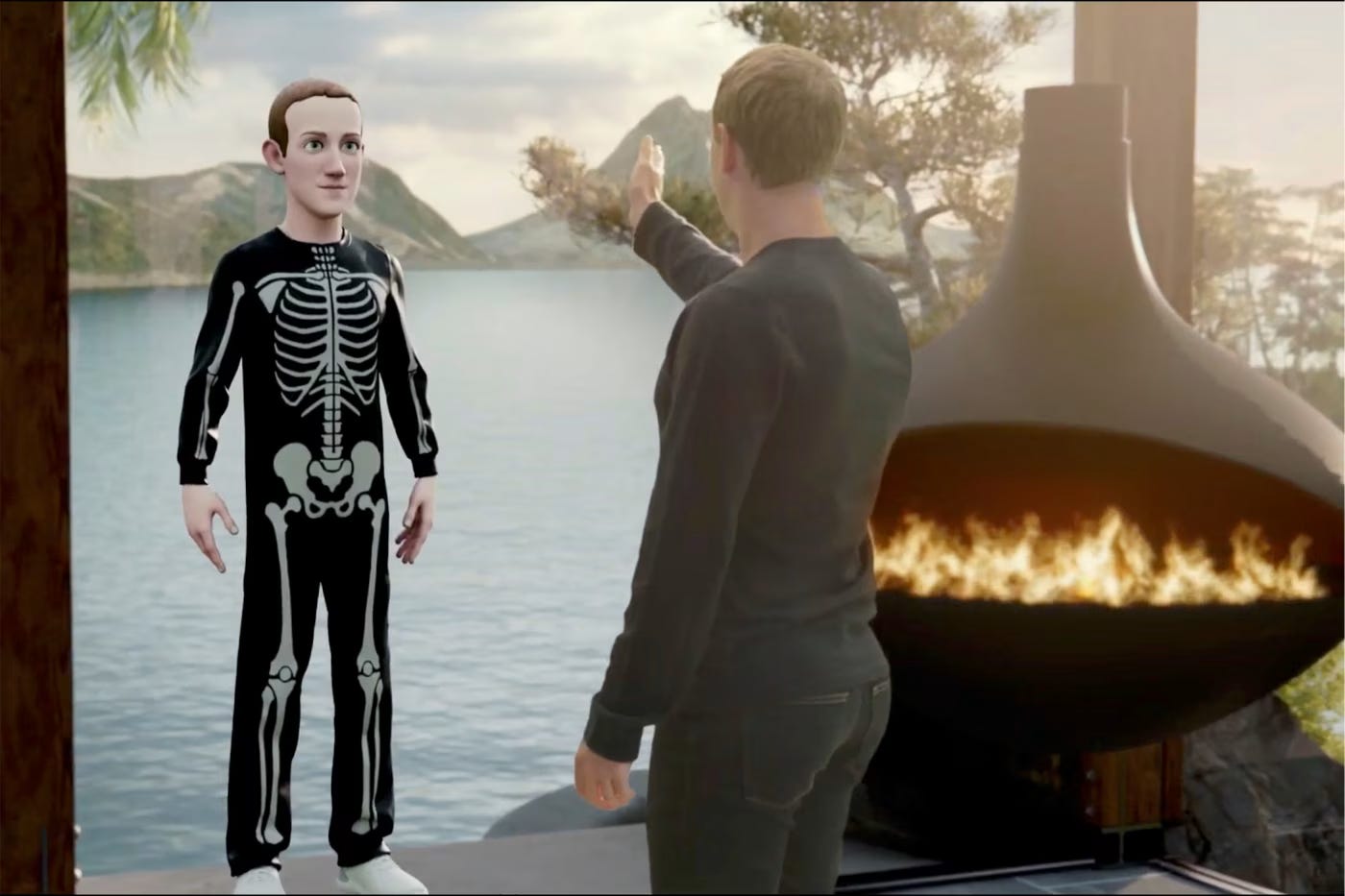
To anyone who has been paying attention, it's clear the VR headset market hasn’t become what Meta hoped it would by now.
IDC estimates that global shipments of VR/MR headsets in 2025 hit a seven-year low of just 4.3 million. Apple is rumored to be pulling back from the category after the tepid reaction to the Vision Pro. Meta didn’t ship a new Quest model in 2025, and its senior leaders barely made a peep about VR throughout the whole year. When I asked Mark Zuckerberg how he was feeling about the category in September, he shifted the conversation to how Meta sees a growth opportunity for its Roblox rival, Horizon, on mobile phones.
There were other, more subtle signs that today’s layoffs at Reality Labs were coming. Vishal Shah, the former leader of the Metaverse group (yes, Meta has an org internally called Metaverse) and a trusted lieutenant of Zuckerberg’s, decamped to work on AI in November. Meta recently paused its efforts to partner with other headset makers before the program even really started. And then, there was the ominous statement last month that the company was shifting money to Alex Himel’s Wearables group, which is responsible for the proliferating lineup of smart glasses with EssilorLuxottica.
It’s not a coincidence that, on the same day Reality Labs cut 10% of employees, Bloomberg reported that Meta and EssilorLuxottica were “discussing potentially doubling production capacity for AI-powered smart glasses by the end of this year,” to the tune of 20 million units. By contrast, in his note to employees today about the layoffs, CTO Andrew Bosworth said that the VR org “will operate as a leaner, flatter organization with a more focused road map to maximize long-term sustainability.”
The Quest has always struggled with retention, and after the 2023/2024 hardware refresh didn’t meaningfully move the needle, it would be strange for Meta to keep investing in the form factor at the same pace it has been. At the same time, until the glasses with Ray-Ban took off, Meta didn’t have a positive hardware story to tell. Excitement about the glasses now gives the company cloud cover to pull back on VR and point to something else that’s growing.
It’s easy to make fun of Meta’s name change and chalk this week’s cuts as a retreat from the metaverse, as many have today. While it’s true that the Quest line has been a disappointment, Meta just spent two years building its own Unity replacement from scratch and is full-steam ahead on Horizon for mobile. In our interview a few months ago, Zuckerberg told me that Horizon will extend to more areas of Meta’s apps, and that a post on Instagram should “be its own world that you can jump into.”
After a decade-plus detour into headsets, the metaverse may end up looking more like Roblox and Fortnite than something you strap to your face.
Elsewhere:
Anthropic gets experimental: Instagram co-founder Mike Krieger is returning to his startup roots and handing the CPO reins to another former Metamate. From Hayden Field at The Verge: “The Anthropic Labs team started in mid-2024 with just two members; now, the company has decided to expand it, with a focus on building ‘experimental products.’ Krieger’s new title will be simply a member of technical staff reporting to Anthropic president Daniela Amodei, and he’ll co-lead the Labs team with Ben Mann, who has been the company’s product engineering lead. Ami Vora, the company’s current ‘head of product,’ will take over Krieger’s duties and work closely with the company’s chief technology officer, Rahul Patil, to scale products.”
Get ready to hear a lot more about AI’s impact on the grid: First, I noticed this report from The Information that ties Google’s acquisition of Intersect to it quietly pushing federal energy regulators to “fast-track approvals for data centers that supply some of their own power.” Then, there’s this GeekWire story about how, as a response to local blowback over the economic and environmental impact of its data center buildouts, Microsoft is committing to not push for local tax breaks for data centers, replenish the water it uses, and pay its own power costs.
More links
A deep dive on Confer, Signal founder Moxie Marlinspike’s new project to secure AI chatbots.
The Wall Street Journal has a deep dive on how AI firms like OpenAI are spending big on advertising.
MIT Technology Review reports on “the new biologists treating LLMs like aliens.”
Bloomberg reports that Spotify’s new co-CEOs hope that “AI can solve some of their problems.”
ICYMI:
Sources is a newsletter by Alex Heath about the AI race, featuring scoops, analysis, and interviews with the tech industry’s most influential figures. Sources is read by thousands of leaders in tech, finance, and media who work at companies such as OpenAI, Anthropic, Nvidia, Meta, Google, Sequoia, Andreessen Horowitz, Bloomberg, The Wall Street Journal, and more. Alex also co-hosts ACCESS, a weekly podcast about the tech industry’s inside conversation.


