


I’m sending this issue from The New York Times DealBook Summit in Midtown Manhattan, where I’ve been hanging out and watching the onstage interviews all day. It has been nice running into some of you. I’m headed back to the West Coast tomorrow.
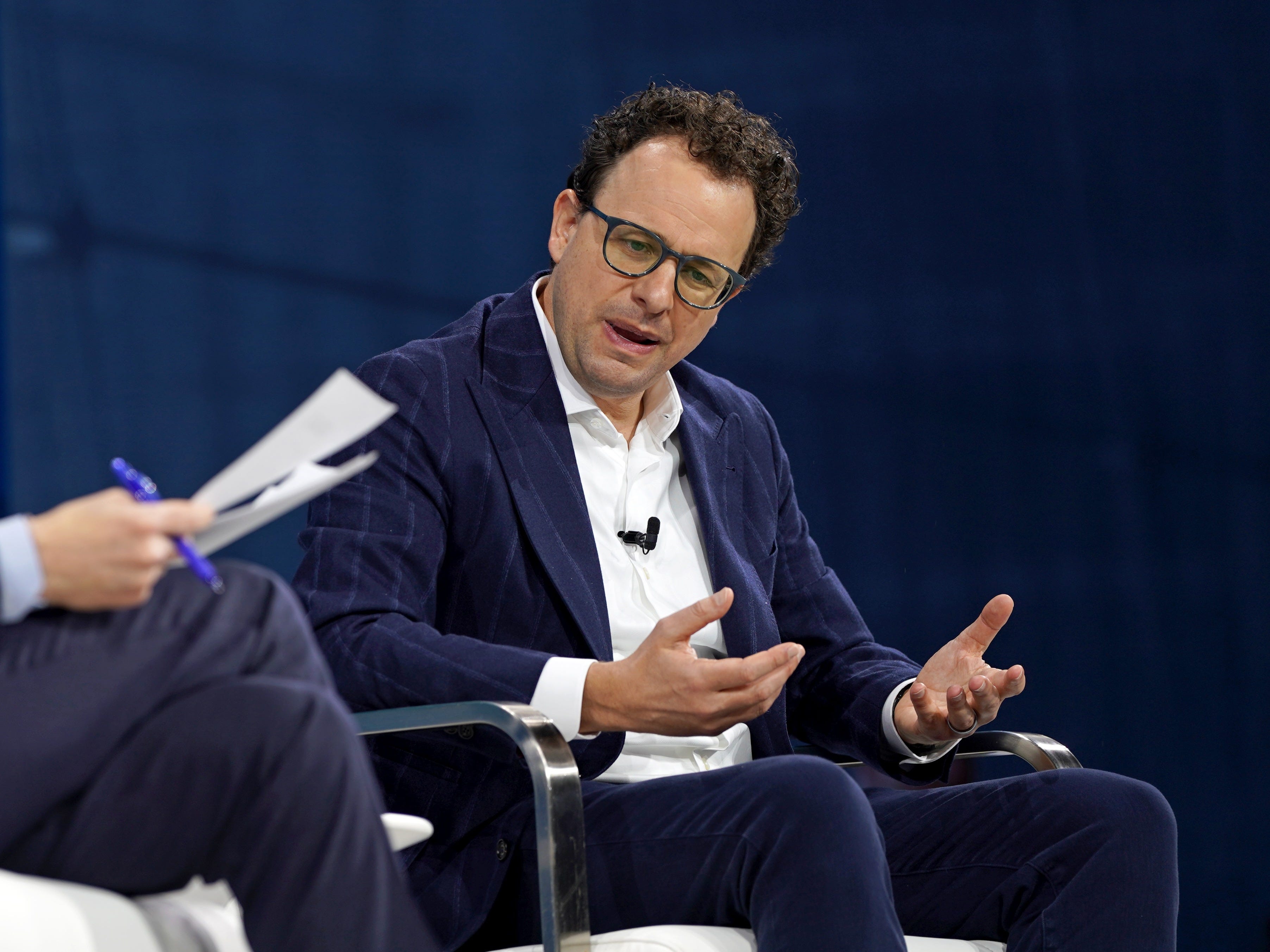
Dario Amodei took the stage at the DealBook Summit on Wednesday to throw punches without naming names.
The Anthropic CEO spent a good chunk of the interview with Andrew Ross Sorkin drawing a careful line between his company’s approach and that of a certain competitor. When asked about whether the AI industry is in a bubble, Amodei separated the “technological side” from the “economic side” and then twisted the knife.
“On the technological side, I feel really solid,” he said. “On the economic side, I have my concerns where, even if the technology fulfills all its promises, I think there are players in the ecosystem who, if they just make a timing error, they just get it off by a little bit, bad things could happen.”
Who might those players be? Despite Sorkin’s prodding, Amodei wouldn’t name OpenAI or Sam Altman. But he didn’t have to.
“There are some players who are YOLOing,” he said. “Let’s say you’re a person who just kind of constitutionally wants to YOLO things or just likes big numbers, then you may turn the dial too far.”
He also touched on “circular deals,” where chip suppliers like Nvidia invest in AI companies that then spend those funds on their chips. Amodei acknowledged that Anthropic has done some of these deals, though “not at the same scale as some other players,” and walked through the math of how they can work responsibly: A new gigawatt data center costs roughly $10 billion to build over five years. A vendor invests upfront, and an AI startup pays back its share of the deal as revenue grows.
While he again didn’t name names, he referenced the eye-popping numbers OpenAI has been trumpeting for its compute buildout. “I don’t think there’s anything wrong with that in principle,” he said. “Now, if you start stacking these where they get to huge amounts of money, and you’re saying, ‘By 2027 or 2028 I need to make $200 billion a year,’ then yeah, you can overextend yourself.”
The cone of uncertainty
The heart of Amodei’s argument was a concept he’s been using internally: the “cone of uncertainty.”
