


Happy Friday. I’m sending this from an Airbnb in Tahoe before I hit the slopes for the weekend. I’ve got this week’s podcast interview with Google’s Liz Reid, who was refreshingly candid about how uncertain the future of Search is at this moment. Keep reading for an OpenAI scoop, a reader response about what really motivates AI CEOs, and more.
"People's habits are not solidified"
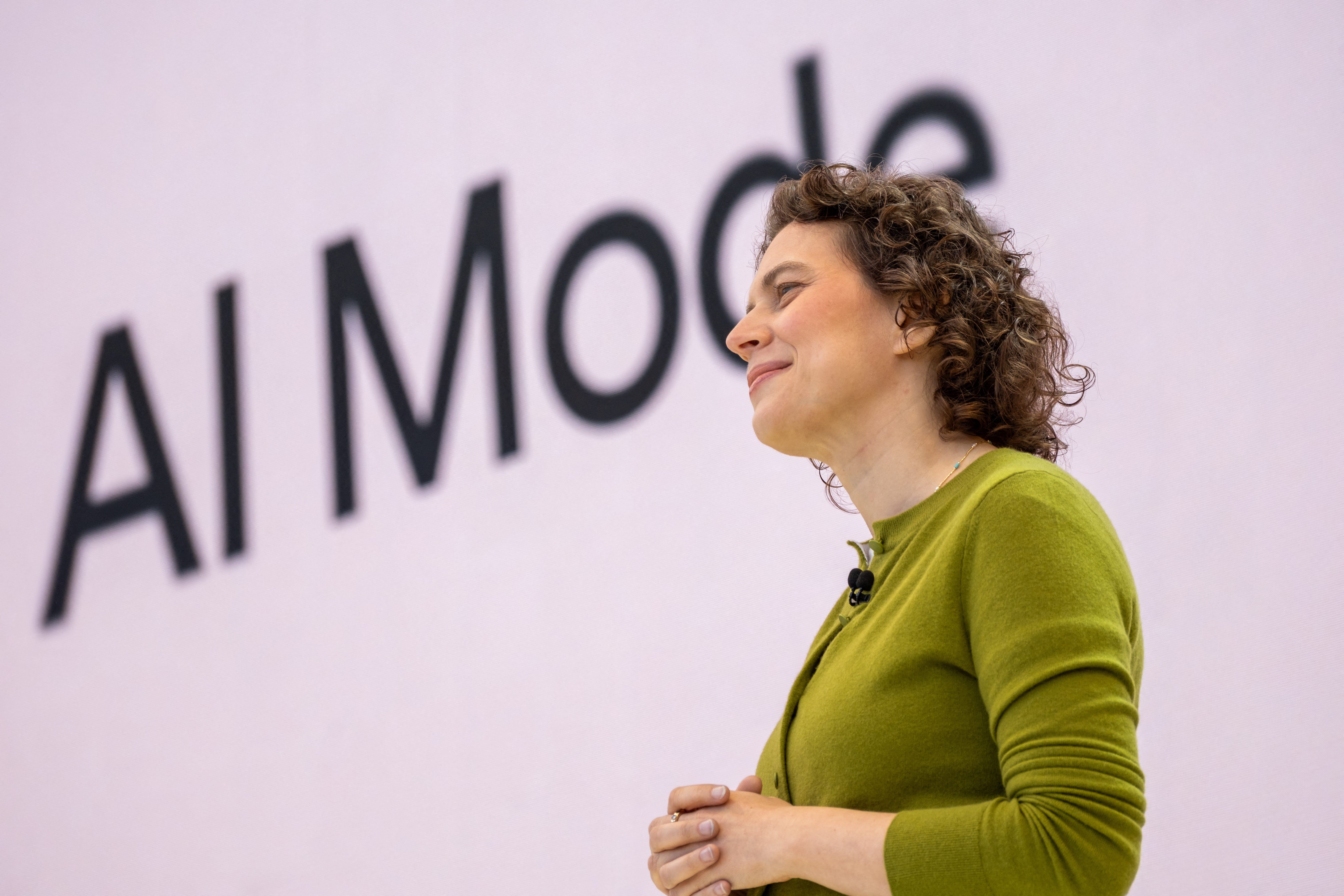
Liz Reid has one of the hardest jobs in tech. She runs Google Search, arguably the best business ever built on the internet, at a time when AI is reshaping how people find and consume information. She’s under pressure to steer Google’s crown jewel through an uncertain time, and her decisions have huge ripple effects. For example, a chart went viral this week showing that major tech publications have lost a majority of their Google traffic since the company rolled out AI results.
During our chat, Reid towed the company line: what AI is doing to Google Search is "expansionary," not zero-sum, and people are asking more questions than ever. But she also said something I haven’t heard from a Google executive before. Asked whether Google Search and Gemini, the company’s standalone AI chatbot, will ever fully merge, she was unusually candid: “I don’t know the answer,” she said, adding that in some areas the products are converging while in others they’re actively diverging, and that the rise of AI agents could mean “the right product is neither” but a third thing altogether.
Catch the full conversation on this week’s episode of ACCESS, the podcast I co-host with Ellis Hamburger:
Reid has been at Google for over 22 years. She was the first female engineer in the company's New York office when there were fewer than 2,000 Googlers in total. She started on the team that built Google Local, which became the foundation for Maps, and took over all of Search in 2024, right as panic about what ChatGPT would do to Google was cresting. She told us she decided to move from Maps to Search because it was hard to say no to running the product that is "the essence of what Google was about."
Highlights from the interview:
