
Thinking Machines is nothing without its people
More Thinking Machines employees are in talks to join OpenAI. Also: Rivian CEO RJ Scaringe on ACCESS and the Sources Live @ Davos lineup.
It’s Thursday, Jan 15th. Well, it’s technically the 15th here in Paris, where I’m struggling to overcome jet lag.
3 things you should know:
Cursor employees used Curosr to build a browser from scratch with GPT 5.2. It “ran uninterrupted for one week” and generated over 3 million lines of code. The verdict: “It *kind of* works!”
If you are an expert in any of the following areas: “deep learning, supply chains, commodities, semiconductors, sovereigns, energy, Excel, prediction markets, monitoring situations,” then Meta’s new Compute org wants you!
Anthropic co-founders who have quit to date: still zero.
Thinking Machines drama
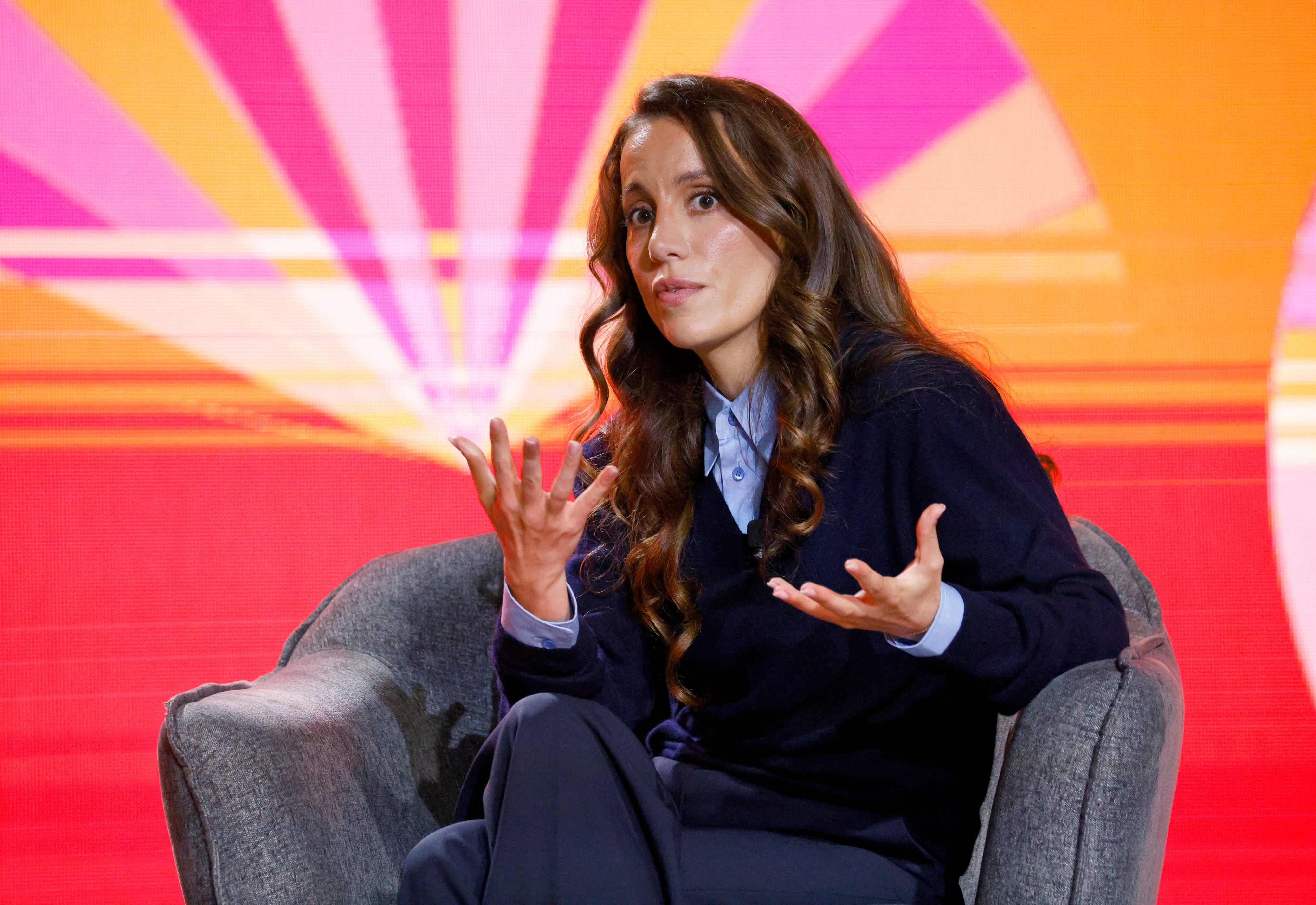
The vibes are off at Thinking Machines, the almost one-year-old neolab founded by ex-OpenAI CTO Mura Murati.
As I first reported earlier today, more Thinking Machines employees are in talks to join the three founding members who just rejoined OpenAI: ex-CTO Barret Zoph, Luke Metz, and Sam Schoenholz. Sources say at least a couple others have already resigned from Thinking Machines after a tense all-hands meeting Murati held on Wednesday about Zoph’s departure, and more are expected to follow suit. Talks are fulid and it’s unclear exactly how many members of Murati’s small startup will ultimately decamp to OpenAI.
Wired reports that Zoph, who previously led post-training at OpenAI, committed misconduct that led to his firing, including the sharing of confidential information with competitors. In a note to OpenAI employees on January 14th that I’ve seen, CEO of Applications Fidji Simo said Zoph told Murati on Monday that he was “considering leaving” and that she fired him on Wednesday. Simo said OpenAI does not “share these concerns” about him being fired for “unethical reasons,” and she noted that the rehires had been “in the works for several weeks.”
Sources close to Thinking Machines tell me the startup lacks a clear product or business strategy and has been struggling over the last couple of months to raise a new round of financing. After raising a $2 billion seed round last year, Murati has been aiming to increase the company’s valuation from $10 billion to about $50 billion. 2025 was a pivotal year for frontier model development, with Google, Anthropic, and OpenAI all notching meaningful gains. Meanwhile, Thinking Machines hasn’t been training a foundation model, and its only product on the market is still Tinker, an API that simplifies the fine-tuning of open-source models.
Andrew Tulloch, another one of the six original co-founders of Thinking Machines, also left for Meta in October. (Mark Zuckerberg, coincidentally, approached Murati about buying the startup earlier in 2025, but sources say those talks didn’t get far.) With Zoph, Metz, and Schoenholz now gone, Soumith Chintala, one of the co-creators of PyTorch, joined Thinking Machines in November and was named its CTO by Murati this week.
While the stakes are lower, this week’s saga feels eerily similar to when Sam Altman was briefly ousted from OpenAI in 2023, and nearly the whole company threatened to quit en masse if he wasn’t reinstated. The AI industry is a lot bigger and more influential than it was then, but as this Thinking Machines drama shows, the companies working the frontier are still nothing without their people.
Rivian CEO RJ Scaringe this week on ACCESS
This week on the pod, Ellis and I discuss Meta's metaverse layoffs and why Claude Cowork might finally make them switch from ChatGPT. Then we are joined by Rivian CEO RJ Scaringe to talk about what the hell large driving models mean, why most people want boring car colors, the stress of EV range anxiety, and why driving might become as nostalgic as riding a horse.
Like and subscribe on YouTube, Spotify, and Apple Podcasts.
Announcing the Sources Live lineup @ Davos
I’m in Davos, Switzerland next week for the inaugural edition of Sources Live, a live event series with tech’s most influential and fascinating leaders.
I’m excited to share the following lineup of conversations I’ll be having on the sidelines of the World Economic Forum at the Brunswick House:
Google DeepMind Co-Founder & CEO Demis Hassabis
ReflectionAI Co-Founder & CTO Ioannis Antonoglou
Scale AI CEO Jason Droege
Meta CTO Andrew Bosworth
Turing CEO & Founder Jonathan Siddharth
ElevenLabs Co-Founder & CEO Mati Staniszewski
I’ll be sharing highlights from these conversations in the newsletter all next week, along with what I’m hearing on the broader tech conversation at Davos this year. Full video of each live interview will also be published in the newsletter afterwards.
If you have questions you’d like me to ask any of the above names, don’t hesitate to submit them by replying in your inbox or hitting the message button below.
More links
Sam Altman’s BCI startup is official: Merge Labs announced its founding team and $252 million in seed funding from OpenAI, Bain Capital, Gabe Newell, and others. Ashley Vance has the exclusive deep dive, which is worth reading. (As I reported last year, leading BCI scientist Mikhail Shapiro is one of the co-founders.) Along with being a rival to Neuralink, Merge is another example of OpenAI backing a company in which Altman is personally involved, though I’m told he is not a direct investor in Merge or its chairman, like he is at Tools for Humanity.
Andrea Vallone, the creator and ex-head of OpenAI’s model policy team, has joined Anthropic to work on “alignment and fine-tuning to shape Claude's behavior in novel contexts.”
Anthropic’s latest Economic Index report says that the US, India, Japan, the UK, and South Korea “lead in overall Claude.ai use.”
Thanks to Hunter Walk for profiling what I’m up to with the newsletter and podcast!
Sources is a newsletter by Alex Heath about the AI race, featuring scoops, unique analysis, and interviews with the tech industry’s most influential figures. Sources is read by thousands of leaders in tech, finance, and media who work at companies including OpenAI, Anthropic, Nvidia, Meta, Google, Sequoia, Andreessen Horowitz, Bloomberg, The Wall Street Journal, and more. In addition to Sources, Alex also co-hosts ACCESS, a weekly podcast about the tech industry’s inside conversation.


