On Monday evening, to kick off Cannes Lions, I hosted two conversations at Yahoo’s beach stage: a conversation with CEO Jim Lanzone, followed by a creator-economy panel with Tyler Denk, co-founder and CEO of beehiiv, Casey Lewis, author of After School, and Cat Goetze, founder of the AI media brand CatGPT. Everything we discussed, naturally, centered on AI.
My main takeaway from both conversations was that, despite all the fear about what AI will do to jobs, everyone agrees that the value of unique, original content is rising.
No content, no answers
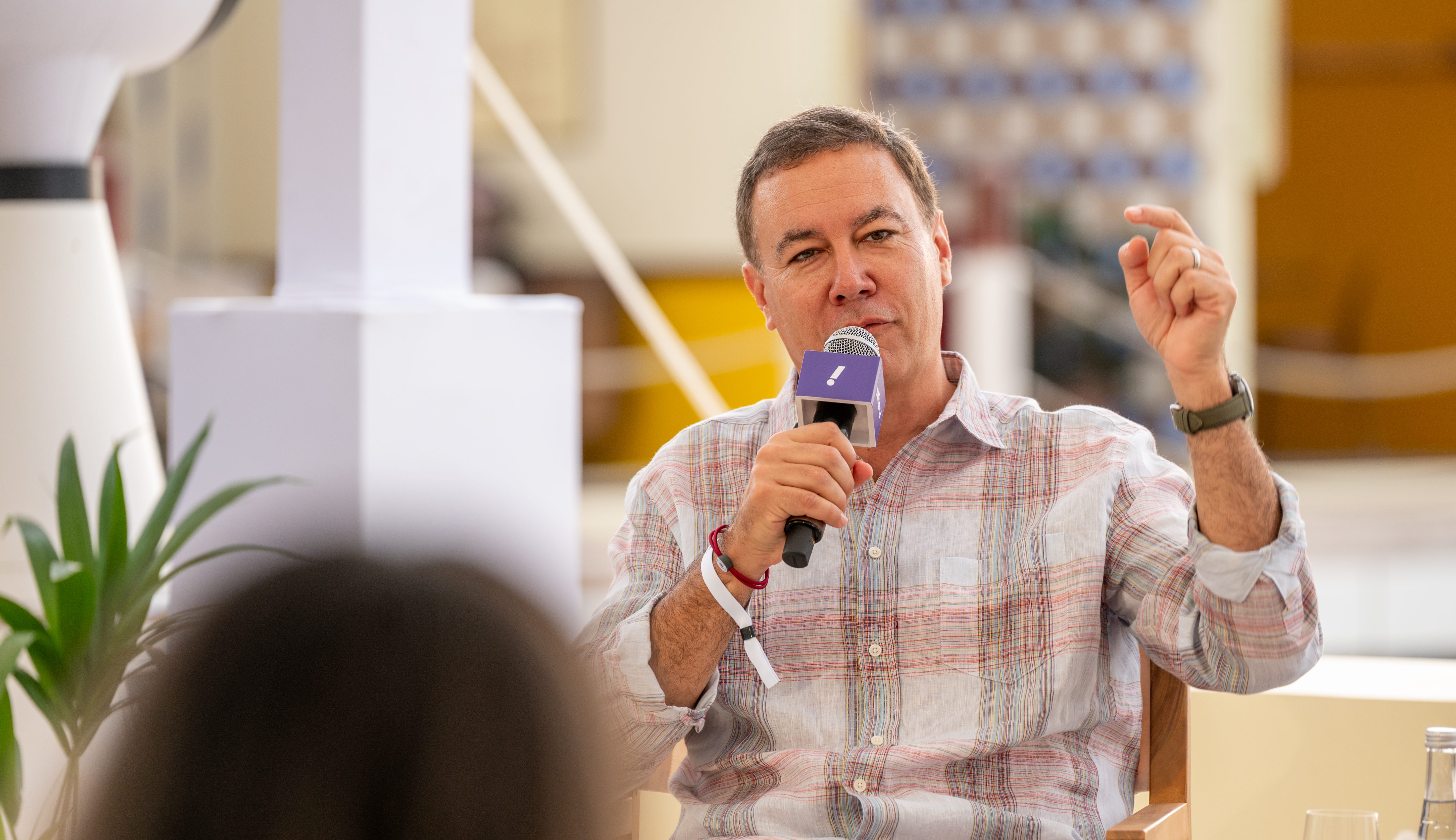
I asked Lanzone why the world needs another chatbot when it already has ChatGPT and Claude. His pitch for Scout, Yahoo’s AI answer engine that launched in January and remains in beta, is that every large language model is “created the same way” by “suck[ing] down the entire internet.” Yahoo’s edge, in his telling, is its decades of search query data, direct relationships with 700 million monthly users, and work with publishers across its news and finance verticals. He said the company is“applying AI search technology to that data” to produce “completely unique answers.”
He thinks the AI industry got the social contract with publishers wrong by hoovering up the web without sending much of anything back, and that licensing payments from AI companies will never scale enough to keep the internet alive. His proposed fix with Scout is the oldest move in search: prominent links that route traffic back to the people who did the reporting. He knows the limits of the alternative. Only so many publishers can sell subscriptions, he noted, with a glance my way: “You’re one of them.”
My last question to him was about the state of the news business, given his current role at Yahoo and his tenure running CBS’s digital business a decade ago. Lanzone pushed back on the popular idea that trust in media is broadly collapsing, arguing the erosion is concentrated in one category, politics and current events, and not sports, finance, or the movie and restaurant reviews people read every day. He thinks more people are producing news now than ever, just outside the gatekeepers who used to control it, and that real journalism "with real integrity" will always have a market and its defenders. As an aggregator sitting atop hundreds of those sources, he said Yahoo is "pretty bullish."
What creators shouldn’t give to AI

All three of my creator economy panelists use AI constantly, and all three protect the same thing: their own ideas.
Goetze: “Never let it come up with your ideas.” She uses AI for what used to be impossible, like work that “would have taken a team of 10,” not just to move faster. Her Bluetooth phone brand did six figures in revenue in just a few days, and she’s opening Cat Labs, a creator-first product studio in LA, built for other people who build things together in a room.
Lewis: She runs every draft of her newsletter through ChatGPT, Claude, and Yahoo to catch typos, but won’t let AI write or generate ideas. “They will never replace thoughtful editors.” She leans on quotes from articles in her newsletter because journalism is “coming from the source’s mouth.”
Denk: Beehiiv’s recently launched MCP server has already surpassed 100 million requests, and the case for it is augmentation: put AI on the admin side so creators spend more time creating, not less. He said the best creators “bring you perspective and experience that can’t be replicated by AI.”
How the kids feel about AI