
Davos kicks off the AI turf war
Google, OpenAI, and Anthropic were slinging mud at each during the World Economic Forum. Also: Sunday CEO Tony Zhao this week of ACCESS.
I’m flying home from Switzerland after a long week in Davos. I stayed up way too late at Barry’s Piano Bar last night due to a rumor that Elon Musk was going to show up. He never did, but the karaoke was still going strong when I finally left.
First, 3 things:
Anthropic's engineering team has had to redesign its coding take-home test for new hires three times because each new Claude model keeps beating it. They're now challenging potential hires to beat Opus 4.5.
Google DeepMind co-founder Shane Legg is hiring a “chief AGI economist” to work on “post-AGI economics, the future of scarcity, and the distribution of power and resources.”
Yikes: Over 50 papers published at the last NeurIPS AI research conference apparently contained hallucinations.
Ganging up on OpenAI
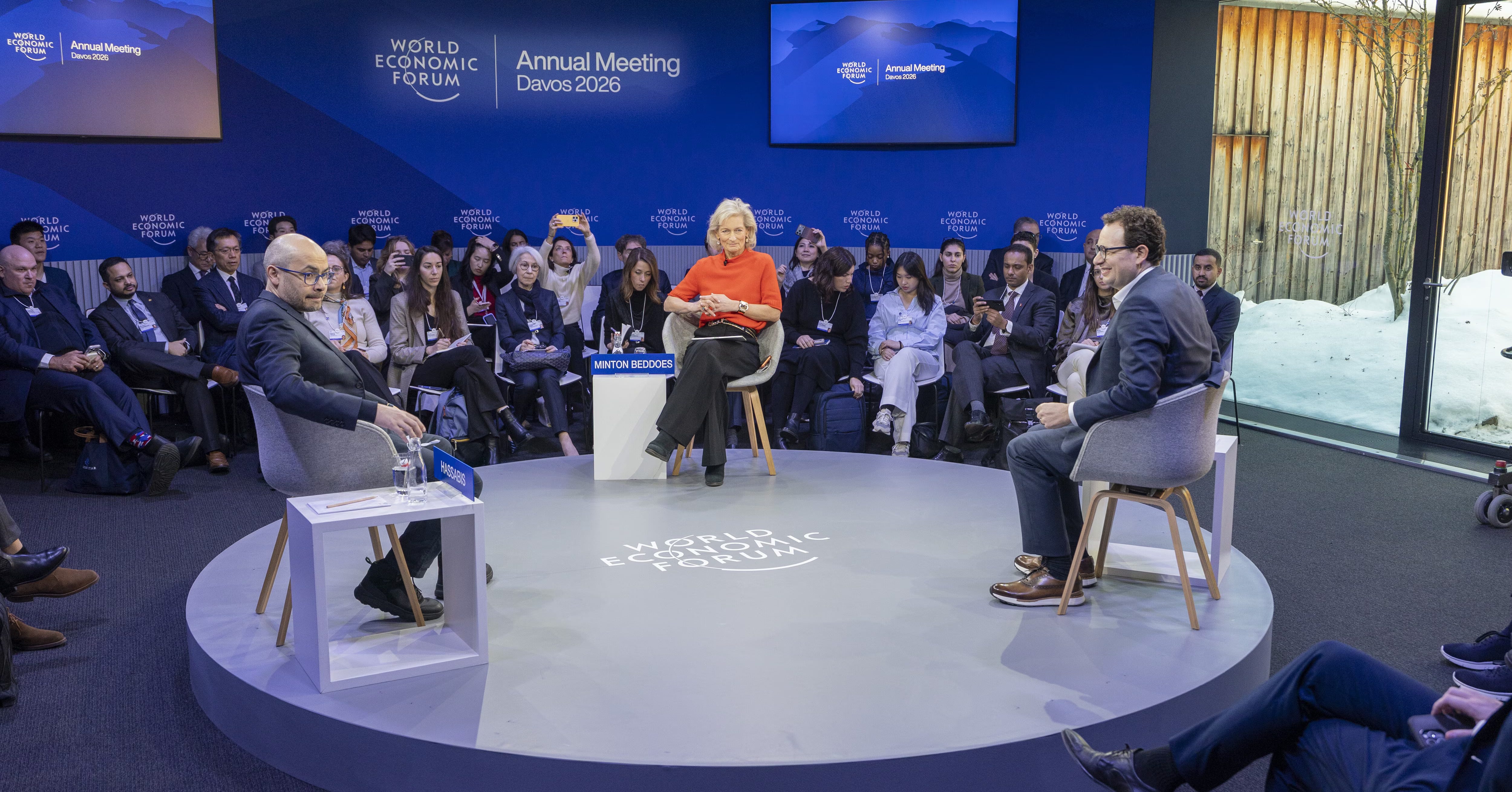
The leaders of the three preeminent frontier AI labs spent this week at the World Economic Forum in Davos, Switzerland, taking shots at each other like candidates in a presidential primary.
I helped start the news cycle. During an interview on Tuesday, I asked Google DeepMind CEO Demis Hassabis about OpenAI’s decision to test ads in ChatGPT. “It’s interesting they’ve gone for that so early,” he said. “Maybe they feel they need to make more revenue.”
The next day, Anthropic CEO Dario Amodei piled it on during an interview I watched at The Wall Street Journal House in Davos. “We don’t need to monetize a billion free users because we’re in some death race with some other large player,” he said. He also teased an upcoming essay focused on the “bad things” AI could bring — a dark counterpart to his optimistic “Machines of Loving Grace” essay from last year. During another Davos appearance, he compared the US allowing Nvidia to sell GPUs to China to “selling nuclear weapons to North Korea.”
OpenAI’s retort came from Chris Lehane, its head of policy and perhaps the most formidable political operator in Silicon Valley. Lehane earned the nickname “master of disaster” in the Clinton White House, where he specialized in opposition research and crisis management. At Airbnb, he helped the company survive regulatory battles that threatened its existence. Now he’s the most high-profile policy chief of any AI lab and is applying tactics from his campaigning days to the AI race.
When I sat down with Lehane for breakfast on Thursday morning near the main Promenade in Davos, he was ready to punch back. In response to Hassabis’s ad comments, Lehane pointed to the obvious irony. “You do have to pay for compute if you’re going to give people access,” he told me. “I’m happy to have that conversation with the biggest online advertising platform in the world every day, seven days a week.” He also called Amodei’s comments “elitist” and “undemocratic.”
“You’ll often have someone who is trying to move up from the second tier say things that are provocative, because it creates a feedback loop,” he told me between bites of scrambled eggs. “That gets you some attention. My experience in politics is that it often ends up being short-lived because ultimately, if you’re saying these things, people are going to hold you accountable to your actual solutions. If we’re going to lose a big chunk of jobs [to AI], what are you actually doing to address it, particularly if you’re raising these questions, right?”
“The people making those critiques are often not focused on how to make this technology broadly accessible,” he continued. “They tend to come from a background that focuses almost exclusively on enterprise use cases. That’s a very elitist approach.”
Reality is much more nuanced than these jabs the AI labs are making at each other. OpenAI is aggressively trying to take Anthropic’s enterprise AI business, as is Google. And while it’s true that ChatGPT is the most widely used chatbot, recasting its ad push as being part of some sort of democratic virtue, and not a financially motivated move to finally monetize most of ChatGPT’s usage, is a nice bit of spin.
During our conversation, Lehane kept returning to his political framing. Being at Davos, he told me, felt “a little bit like walking downtown” in Manchester, New Hampshire, before a primary race: the weather, the signs everywhere, and the campaigns descending into one compressed environment, all trying to get attention.
“We have the front-runner status,” Lehane said. “Even if the front-runner started off as a dark horse, we’ve now established ourselves on the basis of our innovation. And the others are all trying to position off of that.”
After my conversations with AI leaders this week in Davos, I came away with the impression that the industry has collectively decided to gang up on OpenAI. Hassabis and Amodei praised each other onstage during an official WEF panel this week titled “The Day After AGI.”
“I think the thing we actually have in common is that both companies are led by researchers who focus on the models, who focus on solving important problems in the world,” Amodei said during the panel. “I think those are the kind of companies that are going to succeed going forward, and I think we share that between us very much.” (Sam Altman skipped Davos this year and is reportedly in the Middle East raising tens of billions more dollars.)
Meanwhile, OpenAI’s rivals have told me they’re particularly annoyed by Altman’s aggressive attempts to shore up AI capacity, and some are frustrated at getting boxed out of deals by an unprofitable company that hasn’t yet shown it has the revenue to pay for the eye-popping commitments it’s making.
With hundreds of billions of dollars at stake and the race to AGI accelerating, I expect the rhetoric to get more heated this year. Lehane told me campaigns get nastier as Election Day approaches. If he’s right about the analogy, we’re still in the early primaries.
This week on ACCESS: Sunday Robotics CEO Tony Zhao
This week on the podcast: I join Ellis Hamburger in a delirious state at midnight from Davos. We discuss the peculiarities of attending the World Economic Forum, the party scene in Davos, what Thinking Machines was really thinking, and more.
Then, we’re joined by Tony Zhao, founder of Sunday Robotics, to talk about Memo, a new household robot designed for everyday chores. We discuss the challenge of making robots feel helpful rather than threatening, Sunday’s Memory Glove, and what it would take for robots to actually belong in our homes.
Like and subscribe on YouTube, Spotify, or Apple Podcasts.
A MESSAGE FROM MY SPONSOR
Disruptive, founded by Alex Davis in 2012, is a global investment firm focused on backing best-in-class private technology companies. The firm deploys capital through primary, secondary, and structured investments, partnering closely with founders during critical late-stage phases of growth and liquidity.
Elsewhere
Updates on OpenAI and Anthropic’s businesses from Davos: Amodei was telling people on the ground that Anthropic nearly hit a $10 billion run rate at the end of 2025. Meanwhile, OpenAI execs were touting that the API business just hit a $4 billion run rate.
Elon Musk’s surprise WEF appearance was a snooze fest. I was in the room for Musk’s closing talk on Thursday with Larry Fink and, man, it was boring. Musk kicked it off by acting like he was about to say something spicy, but he kept things quite tame. At one point, he did note that SpaceX plans to deploy "solar power AI satellites" that he thinks will generate "hundreds of terrawatts a year.” I noticed that, shortly after he got off the stage, the Financial Times reported that SpaceX had lined up banks for its IPO this year.
Wrapped: My first-ever Sources Live
This week, I interviewed seven tech leaders at Davos in front of a live audience: Google DeepMind CEO Demis Hassabis, Reflection CTO Ioannis Antonoglou, Skild AI CEO Deepak Pathak, Scale AI CEO Jason Droege, Meta CTO Andrew Bosworth, Turing CEO Jonathan Siddharth, and ElevenLabs CEO Mati Staniszewski.
Over the coming days and weeks, I’ll be publishing the full conversations via the newsletter for paying Sources subscribers. Stay tuned.
ICYMI
Sources is a newsletter by Alex Heath about the AI race, featuring scoops, unique analysis, and exclusive interviews. Every week, Sources is read by thousands of decision makers in tech, finance, policy, and media. Click here to learn more.


